





Dimensions Analytics
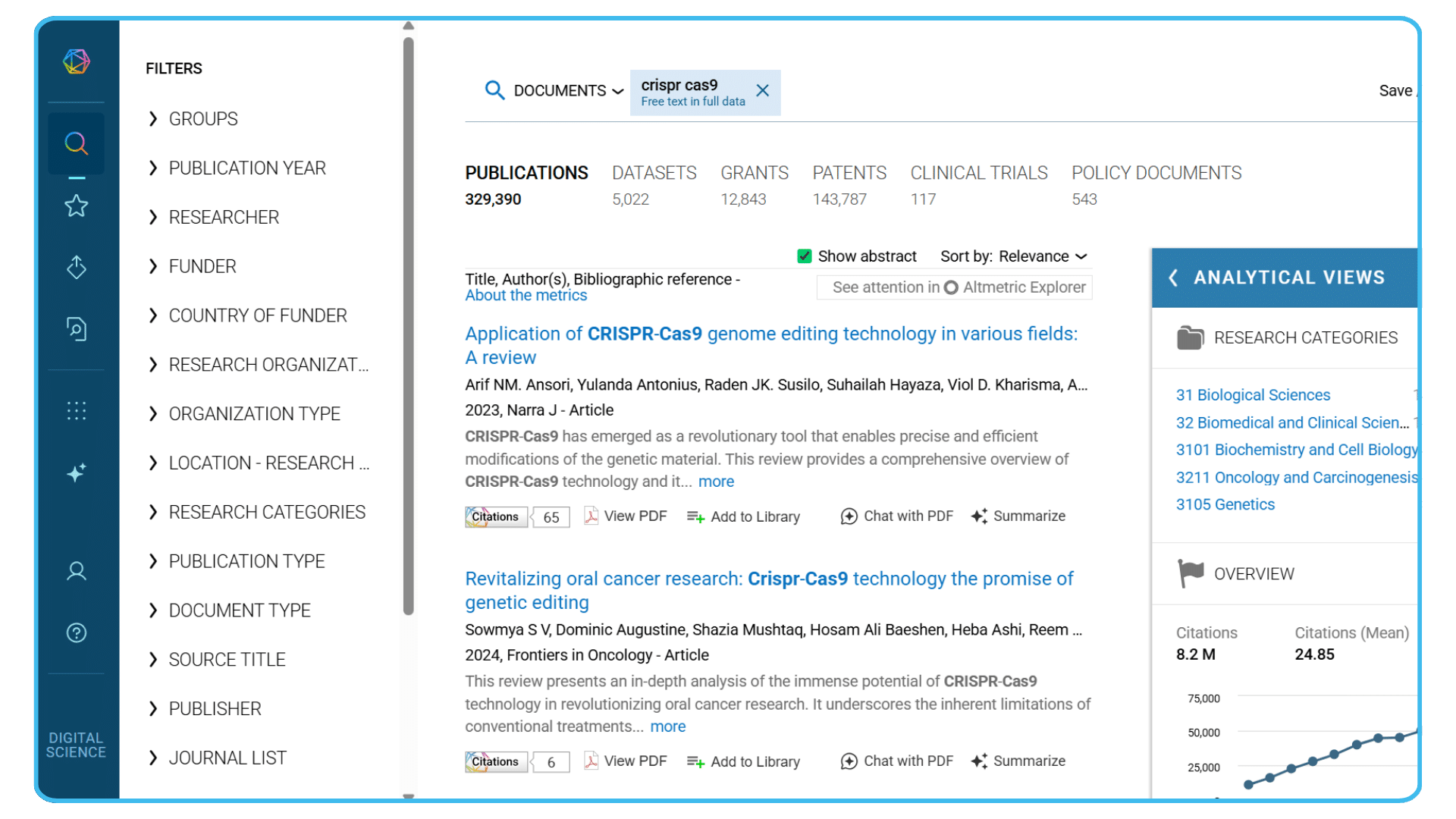
Find the information you need in millions of publications, patents, datasets, grants, and more, and get an overview of topics, organizations, people, or network profiles.
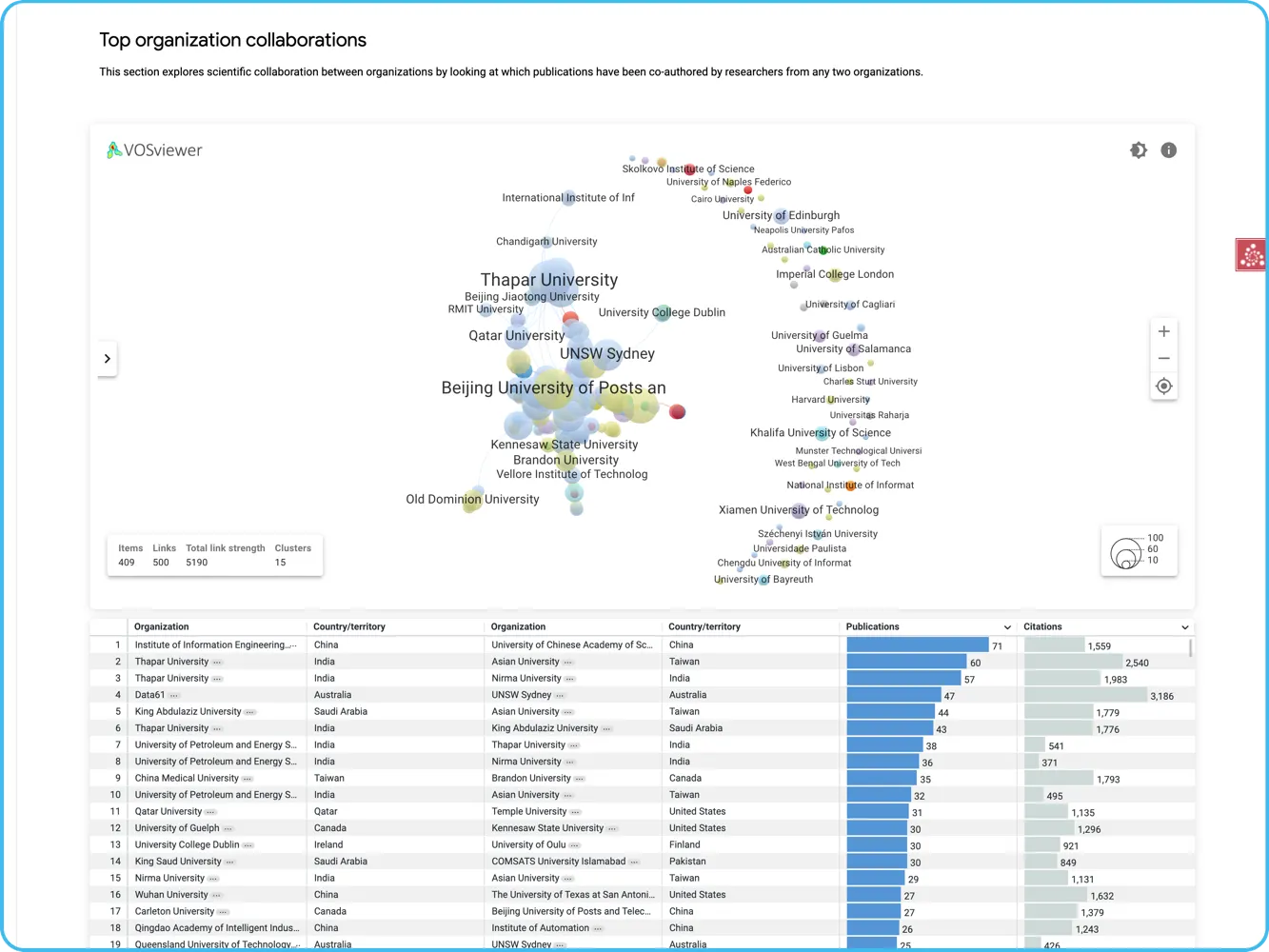

Dimensions provides a suite of research applications and time-saving solutions that connect the dots across the research ecosystem for rapid insight.
We host the largest collection of interconnected global research data, including over 70% of publications with full-text indexing. We then layer this data with easy-to-understand visualizations, purpose-built applications and integrated AI technology to speed up interpretation.
Whatever you need to uncover, our solutions are built to propel your research and save you hours of time.



What is Dimensions?
We provide the world’s largest collection of linked research data, accessible via our web platform and time-saving, workflow-based applications. The Dimensions database consists of vast amounts of linked data from various disciplines in a single platform.
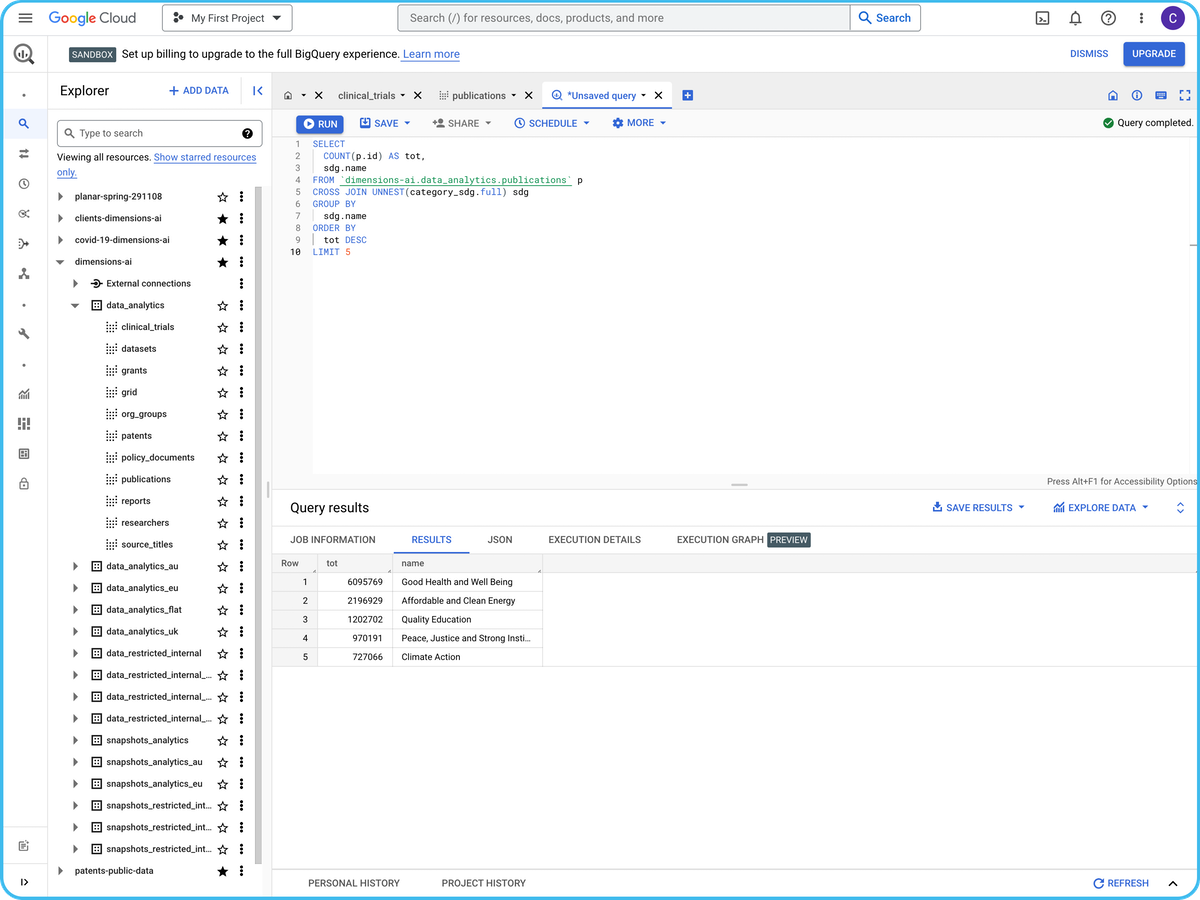
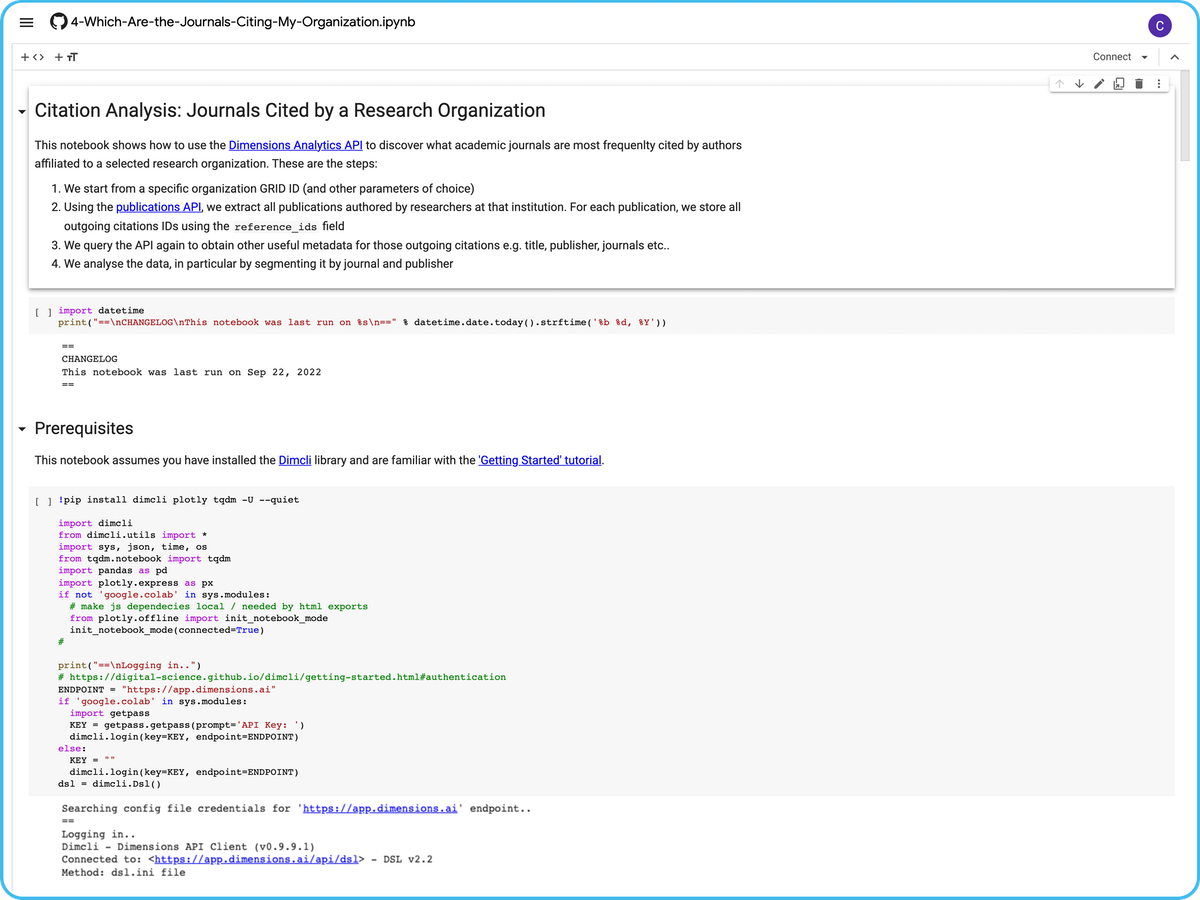
If you have more specific or unique requirements, such as integrating your own data or building a customized solution for your business, our experienced data science experts can help meet your needs.
Watch our short video to learn more about our data and how we speed up research discovery and insight.
Fast-track your workflow. See some of our most popular uses below or explore our use cases to see what else we can do.
Quickly undertake complex landscape analysis.
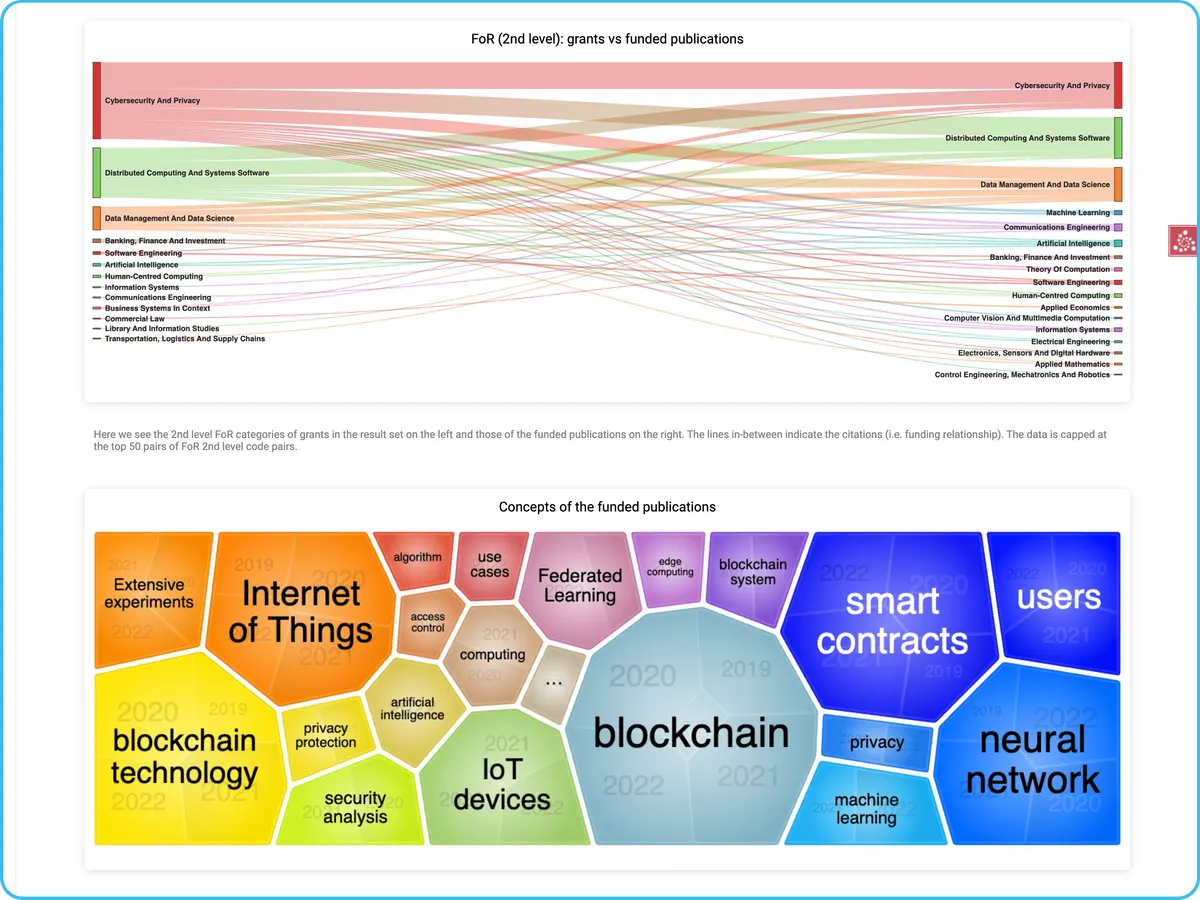
Identify new technologies, spot research opportunities and stay ahead of competitors. Access to the comprehensive Dimensions database allows organizations to identify patterns and make informed decisions for strategic future planning.
Our visual and interactive application allows you to analyze millions of research outputs for any given research landscape in seconds.
Pinpoint reviewers for grant applications or publication manuscripts at speed.
Access a data-driven list of potential reviewers. A “match score” listed against each individual gives an idea of how well their expertise aligns with your application/manuscript.
Protect your institution against research security risk, as we make it fast and simple to manage compliance.
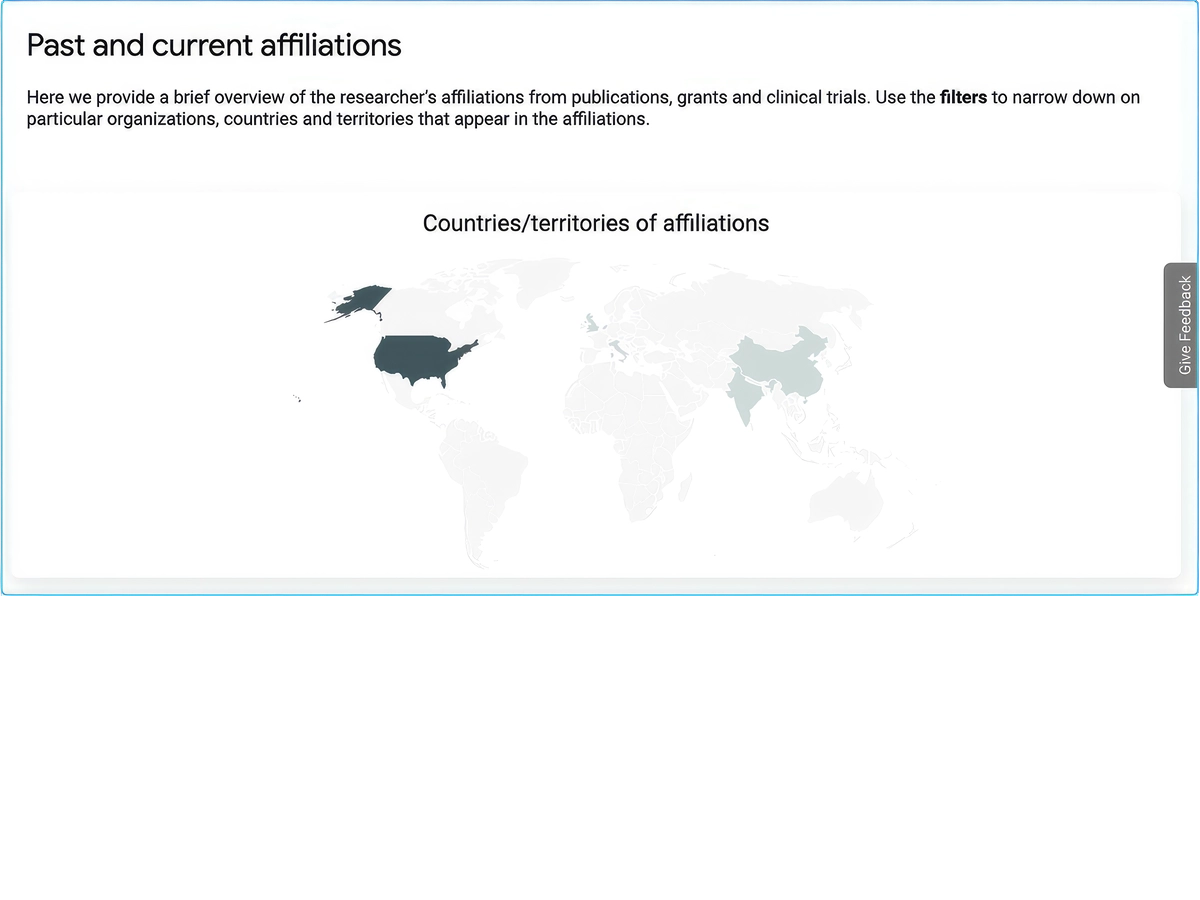
Easily and confidently inform disclosures, prioritize risk factors, and review research networks in a purpose-built research security application that draws on the largest scientific research database, for robust and fast verification.
With Dimensions, the possibilities are endless.
We’re proud to serve organizations big and small across government bodies, pharmaceutical companies and corporate enterprises to leading universities and publishers.
Dimensions data solutions cover the entire research life cycle, from grants to policy documents, providing comprehensive insights that look beyond the publications. We put users at the heart of what we do and have created solutions to solve everyday research problems.
To find a solution for your needs, start by taking a look at our audience pages.
Discover time-saving solutions to accelerate your workflow.
At Digital Science, we developed Dimensions by collaborating with leading research organizations worldwide. As a result, we were able to produce a linked data system that considers all your research needs and more. Request a demo to find out how Dimensions data solutions can improve your research processes.

Find the information you need in millions of publications, patents, datasets, grants, and more, and get an overview of topics, organizations, people, or network profiles.


Subscribe to our newsletter to receive the latest updates about Dimensions and other Digital Science solutions.